
For global B2B buyers and brand owners, sourcing OEM wireless headsets isn't just about finding lower costs—it's about ensuring zero defect rates upon arrival.
A reliable manufacturing partner must have a strict Quality Assurance (QA) SOP at every step of production. To give our partners full transparency into our manufacturing standards, here is a breakdown of how Kovwireless controls quality for bulk orders, using our flagship A8H AI Noise-Canceling Headset as an example.
Stage 1: IQC (Incoming Quality Control)
Before assembly begins, all raw components must pass incoming inspections:
PCBA & Firmware Verification: Validating software and chipset flashing prior to surface mounting.
Battery Sampling: Testing battery capacity, voltage stability, and charging cycle performance.
Speaker & Acoustic Testing: Sampling speaker drivers for frequency response and sound balance.
Housing & Cosmetic Inspection: Inspecting plastic and metal shells for color consistency and surface defects.
Stage 2: IPQC (In-Process Quality Control & Inter-Station Cross-Check)
Because assembling specialized headsets (such as long-boom noise-canceling headsets) requires multiple technical steps, we employ a strict inter-station cross-checking protocol:
Next-Station Verification: Operators at every station inspect the incoming semi-finished part from the previous worker. For instance, when assembling the microphone boom, the worker installing metal plates verifies that all 4 wires on the mic board are soldered correctly.
Immediate Rejection: Any defect found is immediately routed back to the previous station or transferred to QC officers for logging.
Routing QC Patrols: Dedicated IPQC officers continuously monitor assembly lines to catch and correct assembly anomalies in real time.
Stage 3: Sub-Assembly Acoustic Test, Aging & Final Whole-Unit Check
Before the final housing covers are sealed, headsets undergo functional validation:
Sub-Assembly Functional Test: Testing speaker output and microphone clarity while the housing remains open. Only fully functional units move to final mechanical closure.
Aging Test (Burn-In): Fully assembled bare units enter an aging chamber to stress-test battery durability, Bluetooth stability, and power management under load.
Post-Aging Full Unit Inspection: After aging, every single headset undergoes a comprehensive audio, button, and RF connectivity re-test. Only passing units advance to packaging.
Stage 4: Line Packaging & Heat-Shrink Film Protection
Packaging follows a streamlined pipeline with built-in quality checks:
Accessory Cross-Check: Downstream operators verify that user manuals, charging cables, and spare ear tips are not missing from the inner tray.
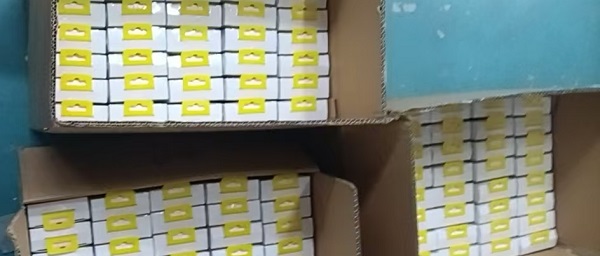
Heat-Shrink Sealing Inspection: Individual retail boxes pass through automated heat-shrink film sealing. QC inspectors verify that every unit is smoothly wrapped without punctures or wrinkles. Any imperfect wrap is stripped off and re-sealed.
🎬 Watch our automated heat-shrink film packaging process video to see how bulk headset orders are sealed for shipping.
Why B2B Partners Trust Kovwireless
Quality control doesn't end when the electronics pass testing—it continues until the master carton is sealed for export freight. By maintaining complete visibility over material checks, line assembly, and protective packaging, Kovwireless delivers retail-ready audio gear with consistent manufacturing standards.
Looking for a trusted OEM/ODM manufacturer for AI noise-canceling headsets? > Contact the Kovwireless engineering team today to request samples, factory specs, or custom packaging solutions.